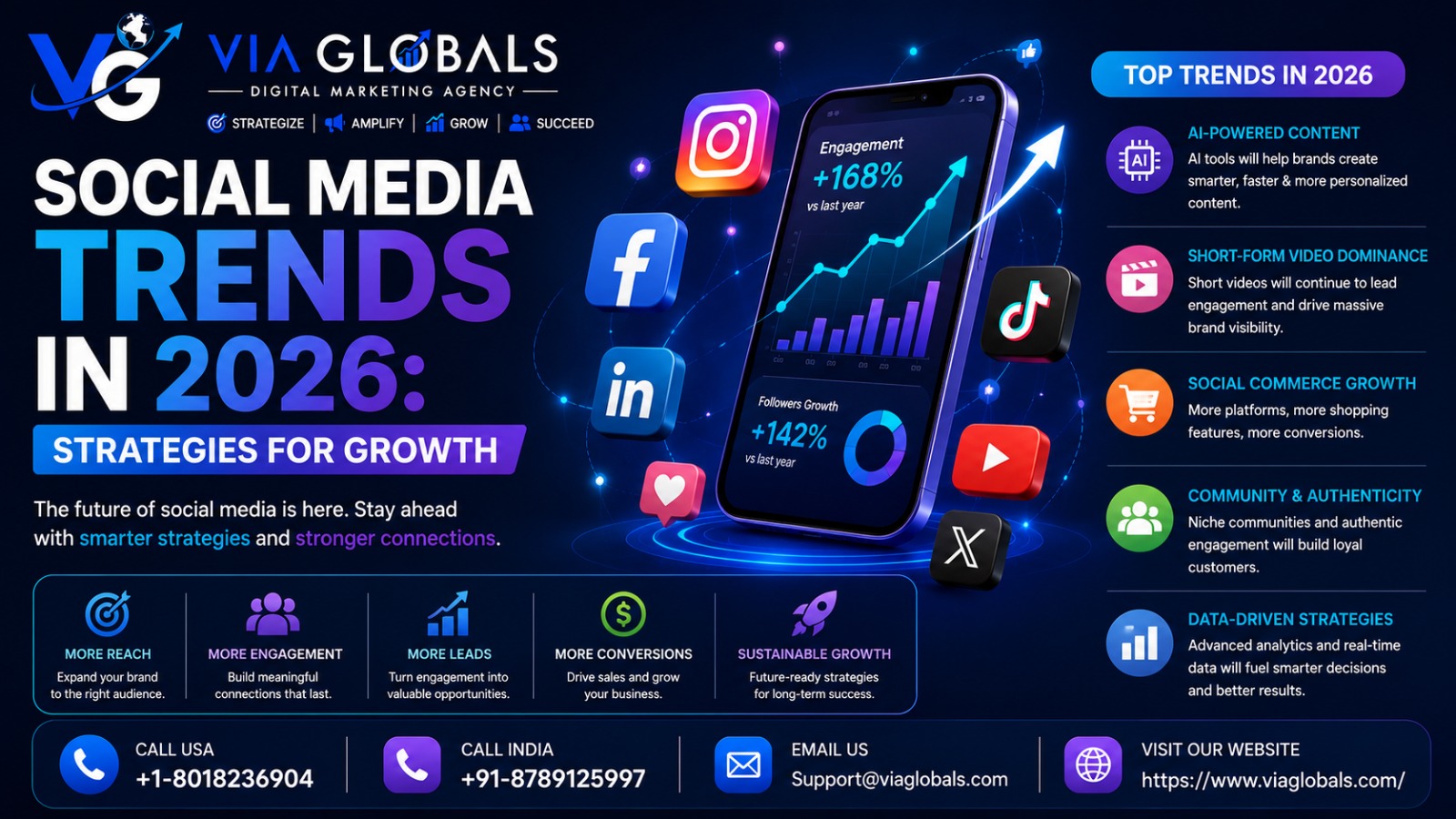
Social Media Marketing Trends in 2026: Strategies for Growth
Whether you're a startup, small business, or enterprise, understanding the latest Social Media Marketing Trends in 2026 can help you build a powerful online presence and achieve sustainable business growth.
Why Social Media Marketing Matters More Than Ever
Social media has transformed from a communication platform into one of the most effective digital marketing channels. Billions of users spend hours daily across platforms like Facebook, Instagram, LinkedIn, TikTok, X (Twitter), and YouTube.
In 2026, successful brands are not just posting content—they are creating experiences, building communities, and delivering personalized value.
Benefits include:
- Increased brand awareness
- Higher website traffic
- Better customer engagement
- Improved lead generation
- Stronger customer relationships
- Higher sales and conversions
1. AI-Powered Content Creation
Artificial Intelligence has become an essential part of social media marketing.
Brands now use AI tools to:
- Generate captions
- Create social media graphics
- Produce videos
- Schedule posts
- Analyze audience behavior
- Predict content performance
AI helps marketers save time while producing highly personalized content that resonates with their audience.
Businesses combining AI with human creativity achieve better engagement and stronger ROI.
2. Short-Form Videos Continue to Dominate
Short-form videos remain the most engaging content format in 2026.
Popular platforms include:
- Instagram Reels
- TikTok
- YouTube Shorts
- Facebook Reels
These videos attract higher reach because users prefer quick, entertaining, and informative content.
Winning video ideas include:
- Product demonstrations
- Behind-the-scenes clips
- Customer testimonials
- Educational tips
- Industry updates
- Trending challenges
Consistency matters more than perfection.
3. Social Commerce Is Growing Rapidly
One of the biggest Social Media Marketing Company is social commerce.
Customers no longer need to visit websites to purchase products.
Platforms now allow users to:
- Browse products
- Read reviews
- Chat with sellers
- Complete purchases
- Track orders
All without leaving the social media app.
This frictionless shopping experience increases conversion rates while reducing abandoned carts.
4. Authentic Content Wins Trust
Consumers are becoming more selective about the content they engage with.
Highly polished advertisements are losing effectiveness.
Instead, audiences prefer:
- Real stories
- Employee-generated content
- Behind-the-scenes videos
- Customer reviews
- User-generated content
- Honest product demonstrations
Authenticity builds credibility and long-term customer relationships.
5. Influencer Marketing Becomes More Targeted
Brands are shifting from celebrity influencers toward micro and nano influencers.
Why?
Because smaller creators often have:
- Higher engagement rates
- Loyal communities
- Better trust
- Lower campaign costs
- More niche audiences
Instead of chasing massive follower counts, businesses now focus on audience relevance and genuine influence.
6. Personalized Marketing Is Essential
Consumers expect brands to understand their preferences.
Using customer data, businesses can personalize:
- Product recommendations
- Ads
- Offers
- Messages
- Email campaigns
- Social media content
Personalization improves user experience and increases conversions significantly.
7. Community Building Over Follower Count
Follower numbers no longer define success.
Brands now prioritize building active communities where customers interact, share experiences, and participate in conversations.
Strategies include:
- Facebook Groups
- LinkedIn Communities
- Discord Servers
- Telegram Channels
- Live Q&A sessions
Community-driven marketing generates stronger customer loyalty than traditional advertising.
8. Employee Advocacy Is Becoming Powerful
Employees are becoming valuable brand ambassadors.
When employees share company updates, achievements, and workplace culture, audiences perceive the content as more trustworthy than branded advertisements.
Businesses are encouraging staff to build professional personal brands on LinkedIn and other platforms.
9. Data Privacy and Transparency
Privacy regulations continue to evolve in 2026.
Customers expect brands to:
- Protect personal information
- Clearly explain data usage
- Obtain user consent
- Respect privacy preferences
Trust is becoming one of the strongest competitive advantages.
Transparent brands earn more loyal customers.
10. Performance Analytics Drive Better Decisions
Modern social media marketing relies heavily on data.
Important metrics include:
- Reach
- Engagement Rate
- Click-Through Rate (CTR)
- Conversion Rate
- Customer Acquisition Cost (CAC)
- Return on Investment (ROI)
Regular performance analysis helps marketers optimize campaigns and improve results continuously.
Best Strategies for Social Media Growth in 2026
To stay ahead of competitors, businesses should follow these proven strategies:
- Create valuable educational content.
- Publish consistently across platforms.
- Invest in high-quality short videos.
- Use AI tools to improve efficiency.
- Focus on audience engagement rather than follower count.
- Build online communities.
- Collaborate with niche influencers.
- Monitor analytics regularly.
- Optimize content based on audience behavior.
- Stay updated with platform algorithm changes.
Conclusion
The future of Social Media Marketing Trends in 2026 revolves around personalization, authenticity, artificial intelligence, and meaningful customer engagement. Businesses that embrace these innovations will build stronger brands, increase customer loyalty, and drive sustainable growth.
Rather than chasing viral content, marketers should focus on creating valuable experiences that solve customer problems and encourage genuine interactions. By staying adaptable and continuously learning, brands can remain competitive in the rapidly changing social media landscape.
Frequently Asked Questions (FAQs)
1. What are the biggest Social Media Marketing Trends in 2026?
The biggest trends include AI-powered content creation, short-form videos, social commerce, personalized marketing, community building, influencer collaborations, and data-driven decision-making.
2. Why is AI important in social media marketing?
AI helps automate content creation, scheduling, audience analysis, personalization, and campaign optimization, making marketing more efficient and effective.
3. Which social media platform is best for business growth in 2026?
The best platform depends on your audience. Instagram, LinkedIn, TikTok, Facebook, and YouTube continue to offer excellent opportunities for business growth.
4. How often should businesses post on social media?
Consistency is more important than frequency. Most businesses benefit from posting 3–5 times per week while maintaining quality and engaging with their audience regularly.
5. Why is community building important in social media marketing?
Strong communities increase customer loyalty, encourage user-generated content, improve engagement, and create long-term relationships that support business growth.
6. How can businesses measure social media marketing success?
Businesses should track key performance indicators such as engagement rate, reach, impressions, website traffic, click-through rate, conversions, customer acquisition cost, and return on investment (ROI)
Ready to scale your business?
Our team can turn these insights into concrete growth for your brand. Let's discuss your marketing, SEO, app development, or custom AI agent integration needs.