What is Online Reputation Management (ORM)? A Complete Guide for Businesses
If potential customers search for your business online and find negative reviews, poor search results, or misleading information, they may choose your competitors instead. Combining Online Reputation Management with effective SEO strategies helps businesses build credibility, improve visibility, and protect their brand image.
What is Online Reputation Management (ORM)?
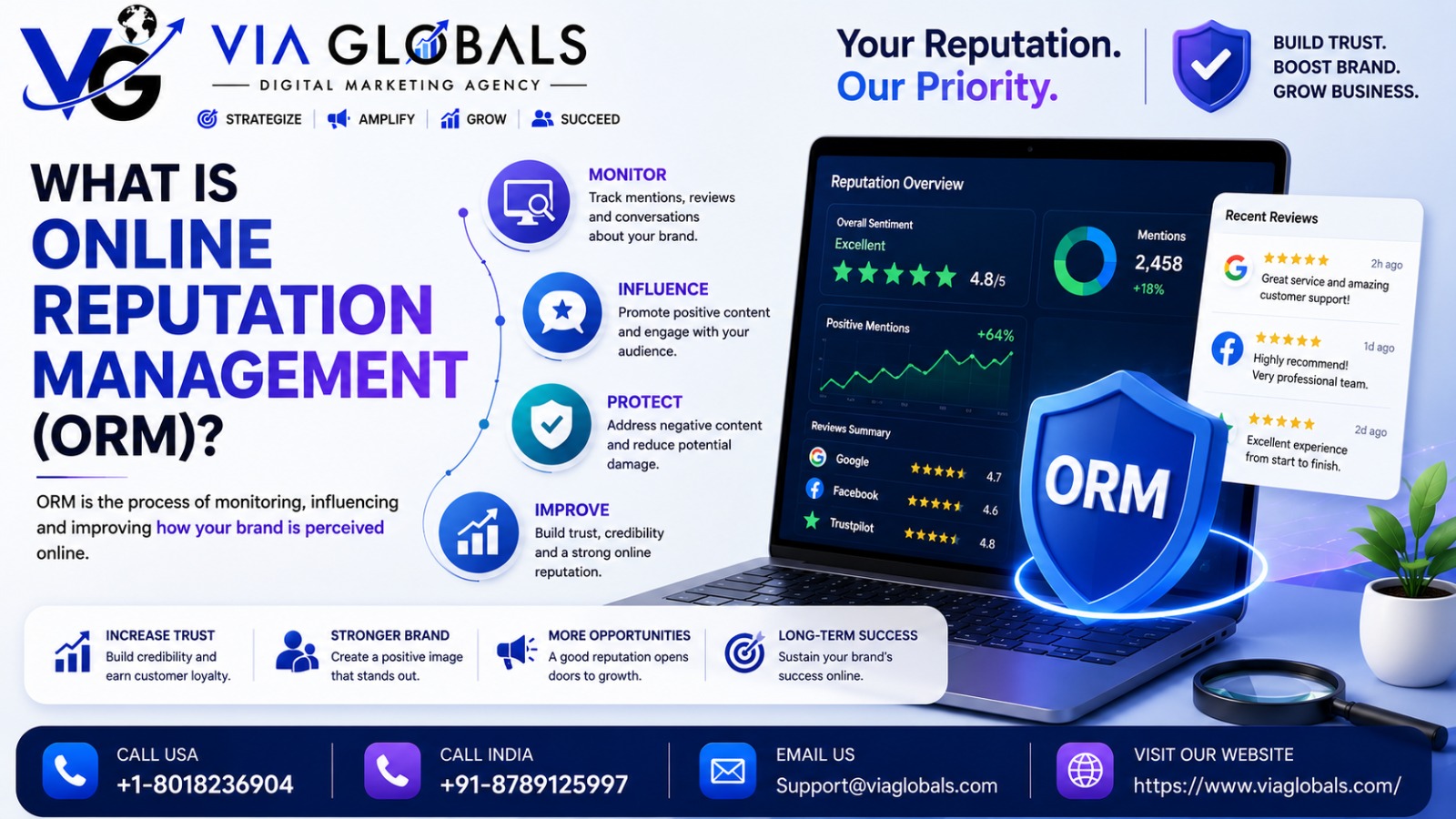
Online Reputation Management (ORM) is the process of monitoring, influencing, and improving how a business, brand, or individual is perceived across digital platforms. It involves managing online reviews, responding to customer feedback, creating positive content, optimizing search engine results, and addressing negative mentions before they damage your reputation.
Unlike traditional public relations, Online Reputation Management focuses specifically on online channels such as:
- Google Search
- Google Business Profile
- Social media platforms
- Review websites
- Blogs and forums
- News articles
- Online directories
A successful Online Reputation Management strategy ensures that positive, trustworthy, and relevant information appears when people search for your business online.
Why is Online Reputation Management Important?
Today's consumers rely heavily on online reviews and search results before making buying decisions. Studies consistently show that customers trust online reviews almost as much as personal recommendations.
Here are some major benefits of Online Reputation Management:
1. Builds Customer Trust
Positive reviews and professional responses create confidence among potential customers. Trust directly impacts conversions and long-term customer loyalty.
2. Improves Search Engine Visibility
Integrating SEO with Online Reputation Management helps positive content rank higher in Google search results while pushing negative or outdated information lower.
3. Increases Sales and Conversions
Customers are more likely to purchase from businesses with excellent online ratings and positive customer experiences.
4. Protects Brand Image
Quickly addressing complaints, misinformation, or fake reviews prevents long-term damage to your business reputation.
5. Creates Competitive Advantage
Businesses with strong online reputations stand out from competitors, even if they offer similar products or services.
Key Components of Online Reputation Management
Review Management
Encourage satisfied customers to leave reviews on Google, Facebook, Trustpilot, and industry-specific platforms. Respond professionally to both positive and negative feedback.
Search Engine Optimization (SEO)
SEO helps positive pages rank higher in search engines. Publishing optimized blogs, press releases, landing pages, and customer success stories strengthens your online presence.
Social Media Monitoring
Customers often discuss brands on social media. Monitoring mentions allows businesses to engage quickly and resolve concerns before they escalate.
Content Marketing
Publishing informative blogs, case studies, videos, and success stories establishes authority while supporting both SEO and Online Reputation Management goals.
Brand Mention Tracking
Monitoring online mentions across websites, news portals, and forums helps identify reputation risks early.
How SEO Supports Online Reputation Management
SEO and Online Reputation Management work together to create a positive digital presence.
Here's how SEO contributes:
- Optimizes positive content for search engines
- Improves rankings for branded keywords
- Pushes negative results lower in search listings
- Drives organic traffic to trustworthy content
- Builds domain authority through quality backlinks
- Enhances visibility of customer testimonials and success stories
Without effective SEO, even excellent content may never reach potential customers searching for your business.
Best Practices for Effective Online Reputation Management
Monitor Your Brand Regularly
Use monitoring tools to track customer reviews, social mentions, and search engine results.
Respond to Reviews Quickly
Always acknowledge customer feedback politely and professionally. Fast responses demonstrate excellent customer service.
Encourage Positive Reviews
Request reviews from satisfied customers after successful purchases or completed projects.
Publish High-Quality Content
Create informative blog posts, FAQs, guides, and videos that highlight your expertise while improving SEO performance.
Optimize Google Business Profile
Maintain accurate business information, upload photos, respond to reviews, and post regular updates.
Be Active on Social Media
Consistent engagement builds stronger relationships with your audience while improving brand credibility.
Address Negative Feedback Professionally
Never argue with customers publicly. Instead, offer solutions and move conversations to private channels whenever possible.
Common ORM Mistakes to Avoid
Many businesses unintentionally damage their reputation by making avoidable mistakes:
- Ignoring negative reviews
- Buying fake positive reviews
- Deleting customer complaints
- Inconsistent branding across platforms
- Not monitoring online mentions
- Neglecting SEO optimization
- Posting low-quality or misleading content
Avoiding these mistakes strengthens both customer trust and search engine rankings.
Best Tools for Online Reputation Management
Several tools help businesses manage their online presence effectively:
- Google Alerts
- Google Business Profile
- SEMrush Brand Monitoring
- Ahrefs
- Mention
- Brand24
- Hootsuite
- Sprout Social
- ReviewTrackers
- Birdeye
These tools simplify monitoring, reporting, and customer engagement while supporting your Online Reputation Management strategy.
The Future of Online Reputation Management
As AI-powered search engines and voice search continue evolving, Online Reputation Management will become even more important. Businesses must focus on authentic customer experiences, transparent communication, quality content, and advanced SEO strategies to maintain a positive online presence.
Brands that consistently invest in reputation management will gain greater customer trust, stronger search visibility, and sustainable business growth.
Conclusion
Online Reputation Management is no longer optional—it's a critical part of every successful digital marketing strategy. From managing customer reviews to improving search rankings through SEO Services, ORM helps businesses build trust, attract more customers, and protect their brand image.
A proactive Online Reputation Management strategy ensures that your audience finds positive, accurate, and trustworthy information whenever they search for your business. By combining reputation management with effective SEO, businesses can strengthen their digital presence and stay ahead in an increasingly competitive online marketplace.
Frequently Asked Questions (FAQs)
1. What is Online Reputation Management (ORM)?
Online Reputation Management (ORM) is the practice of monitoring, managing, and improving how a business or individual is perceived across online platforms, including search engines, review sites, and social media.
2. Why is Online Reputation Management important for businesses?
It helps build customer trust, improve brand credibility, increase conversions, manage reviews, and protect businesses from negative online publicity.
3. How does SEO help Online Reputation Management?
SEO improves the visibility of positive content in search engine results, helping push negative content lower while increasing brand authority and organic traffic.
4. Which platforms should businesses monitor for ORM?
Businesses should monitor Google Search, Google Business Profile, Facebook, Instagram, LinkedIn, X (Twitter), review websites, blogs, forums, and news portals.
5. How often should businesses monitor their online reputation?
Businesses should monitor their online reputation daily or at least several times a week to respond quickly to customer feedback and address potential issues.
6. Can small businesses benefit from Online Reputation Management?
Yes. Online Reputation Management helps small businesses improve customer trust, attract local customers, strengthen SEO performance, and compete effectively with larger brands.
Ready to scale your business?
Our team can turn these insights into concrete growth for your brand. Let's discuss your marketing, SEO, app development, or custom AI agent integration needs.