What Are the Five Core Metrics for Measuring Brand Authority in Search?
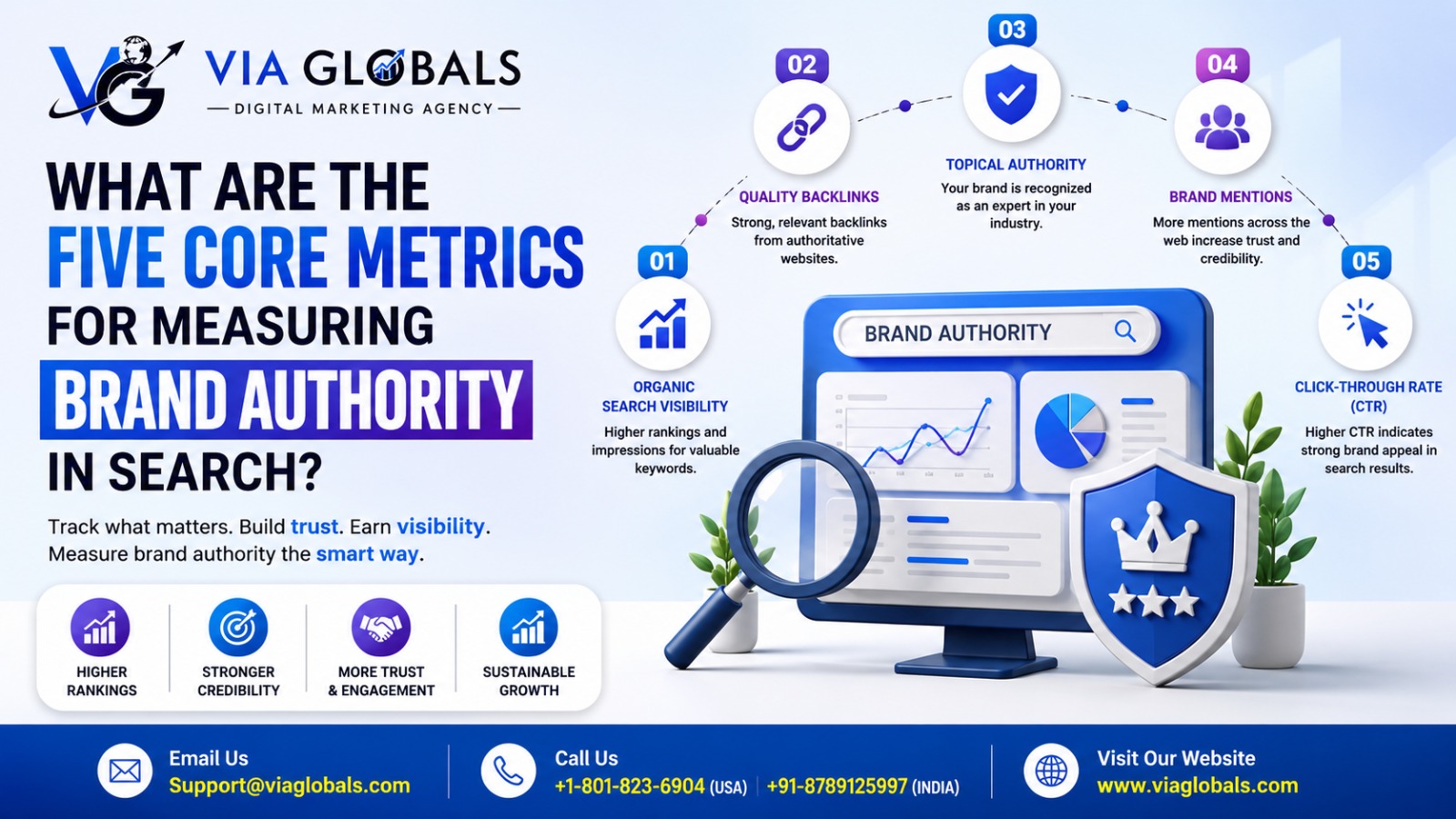
Brand authority isn't measured by a single factor. Instead, it is influenced by multiple SEO indicators that collectively determine how search engines and users perceive your brand. By monitoring these metrics, businesses can improve search rankings, increase organic visibility, and drive sustainable traffic.
Let's explore the five essential metrics that define your brand's authority in search.
1. Organic Search Visibility
The first and most important metric is organic search visibility. This measures how often your website appears in search engine results for relevant keywords.
A brand with strong authority consistently ranks for both branded and non-branded keywords. Higher visibility means more opportunities to attract potential customers.
Why It Matters
- Improves online exposure
- Increases website traffic
- Builds brand recognition
- Enhances credibility
How to Measure
- Google Search Console
- Google Analytics
- SEMrush
- Ahrefs
Improving organic search visibility requires publishing high-quality content, optimizing technical SEO, and targeting relevant search intent.
2. Domain Authority and Backlink Quality
Another critical metric is Domain Authority (DA) along with the quality of your backlinks.
Although Google doesn't officially use Domain Authority, it remains a valuable benchmark for understanding your website's overall strength.
High-quality backlinks from authoritative websites signal trust and expertise.
Focus on:
- Relevant backlinks
- Editorial mentions
- Industry publications
- Government and educational websites
- Digital PR opportunities
Avoid spammy backlinks because they can negatively impact your SEO performance.
A strong backlink profile demonstrates that other trusted websites consider your content valuable.
3. Brand Mentions Across the Web
Search engines increasingly evaluate brand mentions, even when they don't include clickable links.
Mentions across blogs, news sites, forums, podcasts, YouTube videos, and social media contribute to overall brand authority.
Examples of Brand Mentions
- Industry publications
- Press releases
- Customer reviews
- Reddit discussions
- Social media conversations
- Expert interviews
The more your brand is discussed naturally online, the more trustworthy it appears to search engines.
This has become even more important with AI-powered search experiences that rely heavily on entity recognition.
4. User Engagement Signals
Search engines want to recommend websites that users actually enjoy visiting.
Strong user engagement indicates valuable content and a positive user experience.
Important engagement metrics include:
- Average session duration
- Bounce rate
- Pages per session
- Returning visitors
- Click-through rate (CTR)
- Time on page
When visitors spend more time reading your content, interacting with your website, and returning for future visits, it sends positive quality signals.
Improving user engagement involves:
- Fast-loading pages
- Mobile optimization
- Helpful content
- Clear navigation
- Interactive elements
- High-quality visuals
Excellent user experience directly contributes to stronger brand authority.
5. Keyword Rankings and Topical Authority
Ranking for multiple keywords within your industry demonstrates topical expertise.
Instead of ranking for only one keyword, authoritative brands dominate entire subject areas.
For example, if your business specializes in SEO, you should rank for topics like:
- Technical SEO
- Local SEO
- Content Marketing
- Link Building
- AI Search Optimization
- Keyword Research
- Google Ranking Factors
Publishing comprehensive content clusters helps establish topical authority.
Google rewards websites that consistently produce valuable, accurate, and well-structured content covering an entire niche.
How AI Search Is Changing Brand Authority
Modern AI-powered search engines evaluate much more than traditional ranking signals.
Today's algorithms consider:
- Content quality
- Author expertise
- Trustworthiness
- User satisfaction
- Entity recognition
- Semantic relevance
- Brand reputation
This means businesses must focus on creating genuine value instead of simply optimizing keywords.
AI search experiences reward brands that consistently publish accurate, informative, and original content.
Tips to Improve Brand Authority
To strengthen your authority in search, follow these proven strategies:
- Publish consistent, high-quality content.
- Build authoritative backlinks naturally.
- Optimize for user experience.
- Improve website speed and Core Web Vitals.
- Earn positive customer reviews.
- Strengthen your social media presence.
- Create topic clusters around your niche.
- Update old content regularly.
- Monitor your competitors.
- Invest in AI Search Optimization strategies.
Common Tools for Measuring Brand Authority
Several professional SEO tools help monitor these core metrics:
- Google Search Console
- Google Analytics 4
- Ahrefs
- SEMrush
- Moz
- Screaming Frog
- Majestic SEO
These platforms provide valuable insights into keyword rankings, backlinks, traffic, engagement, and overall SEO performance.
Conclusion
Understanding What Are the Five Core Metrics for Measuring Brand Authority in Search? is essential for long-term SEO success. Rather than focusing solely on rankings, businesses should evaluate organic search visibility, domain authority, backlink quality, brand mentions, user engagement, and topical authority.
As AI continues to transform search engines, building genuine trust and expertise has become more important than ever. By consistently delivering valuable content, earning authoritative backlinks, and improving user experience, your brand can establish lasting authority that drives sustainable organic growth.
Frequently Asked Questions (FAQs)
1. What is brand authority in SEO?
Brand authority refers to the level of trust, credibility, and expertise that search engines and users associate with your website. Strong authority typically leads to better search rankings and higher organic traffic.
2. Why are backlinks important for brand authority?
High-quality backlinks from reputable websites act as endorsements, signaling to search engines that your content is trustworthy, relevant, and valuable.
3. How can I improve my brand authority quickly?
Focus on publishing valuable content, earning quality backlinks, optimizing user experience, increasing brand mentions, and improving your website's technical SEO.
4. Does Google use Domain Authority as a ranking factor?
No. Google does not officially use Domain Authority. However, it is a widely accepted SEO metric that helps estimate a website's overall strength and competitiveness.
5. How does AI impact brand authority in search?
AI-powered search engines analyze content quality, user satisfaction, expertise, semantic relevance, and brand reputation to determine authority, making authentic, helpful content more important than ever.
6. Which SEO tools are best for measuring brand authority?
Popular tools include Google Search Console, Google Analytics 4, Ahrefs, SEMrush, Moz, Majestic SEO, and Screaming Frog. They help track backlinks, keyword rankings, organic visibility, engagement, and overall SEO performance.
Ready to scale your business?
Our team can turn these insights into concrete growth for your brand. Let's discuss your marketing, SEO, app development, or custom AI agent integration needs.